Italy is a wonderful country to explore by car — from the Alps to the Adriatic coast, through medieval hill towns and along dramatic coastal roads. But driving in Italy comes with its own rules, quirks and pitfalls. This guide covers everything you need to know before you set off.
| 🚗 Motorway speed limit | 130 km/h (110 km/h in rain) |
| 🏙️ Urban speed limit | 50 km/h |
| 🍷 Blood alcohol limit | 0.5‰ (0.0‰ for new & young drivers) |
| 💶 Motorway tolls | Yes – ticket system, pay on exit |
| 📵 Mobile phone | Hands-free only |
| 🦺 Required equipment | Hi-vis vest, warning triangle, spare tyre |
| 🚫 ZTL zones | Camera-enforced in most city centres |
| 💡 Daytime lights | Mandatory |
Affiliate Disclosure
Driving in Italy – the most important facts at a glance
Knowing the most important traffic rules, tolls and peculiarities of Italian road traffic will ensure you are well prepared.
You will need:
- International Driving Permit (IDP): A driving licence (an EU driving licence is valid, but a non-EU citizen may require an international driving licence)
- Car Documents: Always have your vehicle’s registration and proof of insurance with you. If you’re renting a car, the rental company will provide these.
- A safety vest, a warning triangle and a spare tyre
Traffic rules in Italy – what you must observe
Speed Limits in Italy
Speed limits are clearly posted but strictly enforced, often with cameras.
- Highways (Autostrade): 130 km/h → 81 mph (reduced to 110 km/h / 68 mph in rain)
- On expressways: 110 km/h → 68 mph
- Main roads outside cities: 90 km/h → 56 mph
- Urban areas: 50 km/h → 31 mph
- Residential or school zones: often 30 km/h → 19 mph
Alcohol Limits
Penalties include high fines, license suspension, and in severe cases, even vehicle confiscation.
- Standard legal limit: 0.5‰ (about 0.05%)
- For new drivers (under 3 years of license) or drivers under 21: zero tolerance
Obligatory seat belts, mobile phone ban, compulsory helmets and daytime running lights
- Seat belts are compulsory for all passengers.
- Phone calls can only be made using a hands-free system.
- Helmets are compulsory for motorcyclists and moped riders.
- Daytime running lights are mandatory.
Activities in Italy
See all
Colosseum
Visit Rome’s impressive Colosseum, once home to gladiators and chariots; book admission online early due to high demand
Vatican Museums
Catch a glimpse of one of the greatest art collections in the world, including Michelangelo’s famed Sistine Chapel

Duomo di Milano
Visit Italy’s largest church with instant digital tickets to skip the line and access Milan Duomo’s famous rooftops
Tolls in Italy – how the system works
Freeway tolls and payment system
Most motorways are subject to tolls. You take a ticket when you enter and pay in cash or by card when you exit. On some motorways in northern Italy, a Free-Flow system is in use — there are no gates or toll stations. Instead, cameras capture your licence plate automatically and you pay online within 15 days at pedemontana.com.
Telepass in Italy – is it worth it?
With Telepass, you can pay tolls electronically and drive through special lanes without stopping, saving time at every toll booth.
Special rules for motorcycles & multi-axle vehicles
- Motorcycles often pay less toll.
- Motorhomes and caravans are classified more expensively.
Fines & penalties – what you need to watch out for
Common traffic violations and their costs
- Wrong parking: from approx. 40 €
- Speeding: from approx. 45 € (in urban areas), significantly more expensive on highways
- Cell phone driving: from approx. 160 €
ZTL zones in Italian cities
“Zona a Traffico Limitato (ZTL)” are traffic-calmed city centers, often monitored by cameras. Anyone entering without a permit will automatically receive a fine.
Parking in Italy – tips & traps
- White lines: free of charge
- Blue lines: subject to charge
- Yellow lines: reserved (e.g. for authorities)
Driving a rental car in Italy
What to look out for when booking a rental car?
It pays to book early. Make sure you have sufficient insurance cover and fair fuel regulations.
Insurance & deposit
Additional insurance, such as fully comprehensive insurance with no excess, is recommended. Deposits are often blocked on credit cards.
Traffic rules, especially for tourists
Many violations (e.g. ZTL) will be passed on to you via the car rental provider, including an additional processing fee.
Driving an electric car in Italy
Charging stations in Italy – providers & density
The network is growing rapidly. The major providers are Enel X Way and Be Charge. Their Enel On Your Way and Plenitude On the Road apps are available in several languages. With apps, you can activate pay-per-use rates, among other things. There are also smaller providers and a Tesla charging network. With many domestic and foreign charging cards, you can access most charging stations in Italy. Coverage is good, especially in cities and along highways.
Charging systems & plug standards
- AC charging: Type 2
- DC fast charging: CCS2, CHAdeMO
- Power: from 11 kW to over 350 kW (ultra-fast charger)
Charging and payment apps and cards
The most important Italian apps are Enel X and Plenitude. However, international apps such as Plugsurfing also work well. Charging is usually controlled via the app’s road map function or alternatively via RFID using the app or a special card. Some charging stations also accept credit card payments.
Special rules for e-cars in Italy
- In some cities, electric cars are permitted to enter ZTL zones or park free of charge in blue parking spaces.
- Mostly free parking is available during the charging process.
- Regional toll discounts are also available
Refueling & petrol prices in Italy
Different systems at petrol stations
- Servito: Attendant service, more expensive
- Self-service: cheaper, automatic filling station.
Gasoline and diesel prices in Italy
Prices are similar to those in Germany and France, but they differ significantly between highways and cities.
Tips for filling up cheaply
- Off-highway gas stations are significantly cheaper
- It is worthwhile to compare prices via an app
Practical tips for safe driving in Italy
What to do in the event of an accident
If an accident occurs, stay calm. Secure the accident site with a high-visibility vest and warning triangle. In the event of a major accident, call 112 to coordinate the police and rescue services. For minor damage, it is advisable to complete a European accident report form. Photos and witness details are also helpful.
If your vehicle needs to be towed, call your insurance company’s emergency number. If you do not have breakdown cover, you can call the Italian Automobile Club on 800 116 800 (English-speaking service) or 803 116 to arrange to have your car towed away for a fee.
Protection against theft and car break-ins
Do not leave luggage or valuables on view in your car, and if possible, park in a guarded car park. Vehicles should not arouse the interest of thieves, especially in quiet side streets and at night.
Beware of fraud attempts!
Occasionally, fake accidents occur, such as the so-called ‘mirror trick’. In this case, fraudsters claim that you have damaged their car. Motorcyclists or cyclists may show you an abrasion on their leg. Stay calm in such situations, call the police, and never pay the alleged victim directly.
Driving in Rome, Florence and Naples
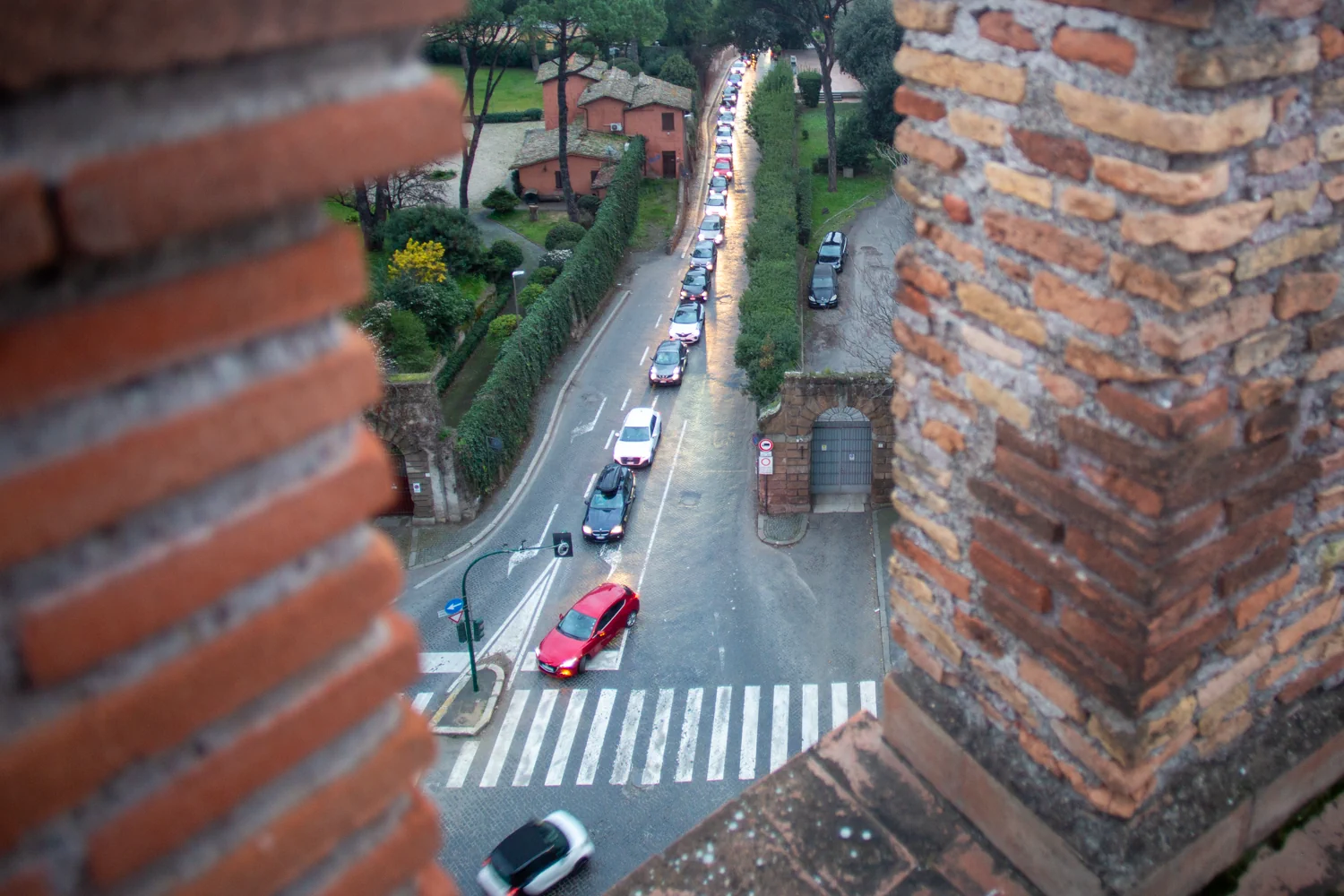
Narrow streets, heavy traffic and lots of scooter drivers mean that composure and defensive driving are crucial.
You can find more information about driving in Rome here.
Driving in Sicily & Tuscany
Roads are often narrow in rural regions, but they offer wonderful panoramas.
Winter tires compulsory
They are compulsory in some regions of northern Italy and on other routes in mountainous areas. As a rule, this begins on 15 November, but in some regions or in certain weather conditions it may begin earlier. In certain circumstances, it may only be possible to continue driving with snow chains. Winter tyres may no longer be used from 15 April.
Cultural differences in road traffic
Italians often drive more spiritedly. In central and southern Italy, you can observe a kind of swarm intelligence in city traffic. Therefore, it is important to maintain all-round visibility, adapt to the flow of traffic, avoid insisting on your supposed rights, stay calm and drive with foresight.
Conclusion – mastering driving in Italy in a relaxed manner
If you familiarise yourself with the traffic rules, factor in tolls and exercise caution in ZTL zones, you can easily explore Italy by car. The country now offers a dense network of charging stations for electric car drivers, and even special rights in cities. This makes driving in Italy a pleasant and safe travel experience.
Frequently asked questions about driving in Italy
What documents do I need to drive in Italy?
EU driving licence, vehicle registration and proof of insurance. Non-EU drivers may also need an International Driving Permit. Always carry a hi-vis vest, warning triangle and spare tyre in your vehicle.
What is the speed limit on Italian motorways?
130 km/h in dry conditions, reduced to 110 km/h in rain or for drivers with less than 3 years of licence. Speed is monitored both by fixed Autovelox cameras and by the Tutor section-control system, which calculates your average speed over several kilometres.
What is ZTL and how do I avoid fines?
ZTL (Zona a Traffico Limitato) are camera-monitored restricted zones in Italian city centres. Entry without a permit results in an automatic fine. Check ZTL hours before entering any historic centre and ask your hotel whether they can arrange a temporary permit.
Do I have to pay tolls on Italian motorways?
Most motorways use a ticket system: collect a ticket on entry, pay by cash or card on exit. Telepass lets you pass through dedicated lanes without stopping, saving time at every toll booth. On some motorways in northern Italy, a Free-Flow system is in use — no gates, your licence plate is captured automatically and you pay online within 15 days at pedemontana.com.
What are the parking rules in Italy?
White lines = free. Blue lines = paid parking. Yellow lines = reserved (authorities, disabled). Always check local signs as rules vary by city and time of day.
Can I drive an electric car in Italy?
Yes — the charging network is well developed, especially along motorways and in cities. Main providers are Enel X Way and Be Charge. Electric cars often enjoy ZTL access and free parking during charging in many Italian cities.
What should I do if I have an accident in Italy?
Secure the scene with hi-vis vest and warning triangle. For serious accidents call 112. For minor damage, complete a European accident report form and photograph the scene. For breakdown assistance call 800 116 800 (English-speaking service).
Car Rental Italy 2026 – Insurance, Costs & Essential Tips
A rental car is the ideal way to discover Italy flexibly and independently. Whether it’s the picturesque coastal roads of…>>>
ZTL Italy 2026 – Driving Bans in Rome, Florence & Milan
If you travel through Italy by car, you will sooner or later encounter a ZTL zone (Zona a Traffico Limitato)…>>>
Tolls in Italy 2026 – Costs, Telepass & Highway Tips
Almost all Italian motorways (autostrade) require a toll. Understanding how the toll system in Italy works before you set off…>>>
Disclaimer
All information is without guarantee. Special regulations apply for some groups of people (e.g. novice drivers) or vehicle types. For specific information, please contact your automobile club or embassy.