
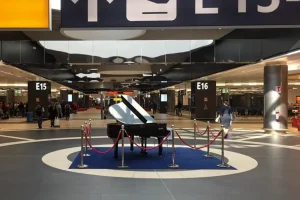
Italy has more than 40 commercial airports – from major international hubs to charming regional airports. Over 60% handle more than one million passengers per year. This overview covers the most important airports in the country – with personal impressions, transfer options, up-to-date passenger figures (2025), and practical tips including the current liquid rules at security.
Affiliate Disclosure
Italy Airport Codes & Statistics
IATA Codes, Passengers, and Key Figures (Source: Assaeroporti)
| # | Airport | IATA | City / Region | Passengers 2025 | YoY % |
|---|---|---|---|---|---|
| 1 | Roma Fiumicino “Leonardo da Vinci” | FCO | Rome | 51,306,744 | +4.3% |
| 2 | Milano Malpensa | MXP | Milan | 31,385,585 | +8.6% |
| 3 | Bergamo Orio al Serio | BGY | Milan (low-cost hub) | 16,937,976 | −2.4% |
| 4 | Napoli Capodichino | NAP | Naples | 13,271,522 | +4.9% |
| 5 | Catania Fontanarossa | CTA | Sicily | 12,369,485 | +0.2% |
| 6 | Venezia Marco Polo | VCE | Venice | 11,850,336 | −1.4% |
| 7 | Bologna “Guglielmo Marconi” | BLQ | Bologna | 11,138,013 | +3.4% |
| 8 | Milano Linate “Enrico Forlanini” | LIN | Milan (city airport) | 11,131,764 | +4.5% |
| 9 | Palermo “Falcone-Borsellino” | PMO | Sicily | 9,220,905 | +3.4% |
| 10 | Bari “Karol Wojtyła” | BRI | Apulia | 7,977,881 | +9.7% |
| 11 | Pisa “Galileo Galilei” | PSA | Tuscany | 5,977,227 | +7.8% |
| 12 | Cagliari “Mario Mameli” | CAG | Sardinia | 5,254,433 | +1.8% |
| 13 | Torino “Sandro Pertini” | TRN | Turin | 5,006,169 | +6.7% |
| 14 | Olbia “Costa Smeralda” | OLB | Sardinia | 4,161,572 | +7.2% |
| 15 | Roma Ciampino | CIA | Rome (low-cost) | 3,987,517 | +3.3% |
| 16 | Verona “Valerio Catullo” | VRN | Veneto | 4,027,863 | +8.7% |
| 17 | Firenze “Amerigo Vespucci” | FLR | Tuscany | 3,847,658 | +9.4% |
| 18 | Brindisi “Papola-Casale” | BDS | Apulia | 3,444,438 | +1.7% |
| 19 | Treviso “Antonio Canova” | TSF | Venice (low-cost alt.) | 3,200,130 | +5.0% |
| 20 | Lamezia Terme | SUF | Calabria | 3,049,594 | +12.4% |
| Source: Assaeroporti 2025. Sorted by passenger volume. | |||||
Activities in Italy
See all
Colosseum
Visit Rome’s impressive Colosseum, once home to gladiators and chariots; book admission online early due to high demand
Vatican Museums
Catch a glimpse of one of the greatest art collections in the world, including Michelangelo’s famed Sistine Chapel

Doge's Palace
Book Doge’s Palace skip-the-line tickets online for instant mobile delivery, fast entry, and a walk across the Bridge of Sighs
Best Airports in Italy
Rome Fiumicino Airport “Leonardo da Vinci” (FCO)
Rome Fiumicino is Italy’s largest and busiest airport – handling 51.3 million passengers in 2025 (+4.3%), and repeatedly awarded as Best Airport in Europe (Hub >40 million passengers) by Skytrax. The 5-Star Skytrax rating and a top ACI-ASQ score confirm its exceptional quality.
Security is fast and modern: EDS-CB scanners allow liquids up to 2 litres in hand luggage – no need to remove them or your electronics at the checkpoint. Dining options are diverse and of high quality. Only downside: passport control for non-Schengen arrivals can take a little longer during peak hours.
Transfer to Rome city centre:
- Leonardo Express train: FCO → Roma Termini (32 min / ~30 km)
- Regional train FL1: FCO → Trastevere, Ostiense, Tiburtina (40 min, cheaper)
- Bus: several shuttle services (~50 min)
- Taxi: fixed fare to central Rome (~50 €, 40–50 min)
Bologna “Guglielmo Marconi” Airport (BLQ)
Bologna Airport impresses with excellent organisation and a pleasant atmosphere. Despite handling 11.1 million passengers in 2025 (+3.4%), queues remain short and procedures efficient. EDS-CB scanners are active, so liquids up to 2 litres are permitted in hand luggage and electronics stay in your bag. The Marconi Express monorail connects directly to the central train station – ideal for onward travel to Florence, Milan, or Rome.
Shopping tip: Buy authentic Bolognese tortellini at the deli counter on the ground floor. They’re really delicious in chicken broth with Parmesan.
Transfer: Marconi Express → Central Station (7 min); Bus/Taxi → city centre (15–20 min)
Bari “Karol Wojtyła” Airport (BRI)
Bari is the gateway to Apulia – one of Italy’s fastest-growing regions for tourism. The airport handled nearly 8 million passengers in 2025 (+9.7%), making it the tenth-busiest in the country. Bright terminals, regional products, and friendly staff create a welcoming atmosphere. Together with Brindisi (BDS, 3.4M passengers), it gives the region excellent connectivity across Europe.
Transfer: Regional train → Bari Centrale (20 min); Bus → Central Station (25 min); Taxi (20–30 min)
Continuing by car through Italy?
Major Airports in Italy
Milan Malpensa (MXP)
With 31.4 million passengers in 2025 (+8.6%), Malpensa is Italy’s second-largest airport and its main intercontinental hub. Two terminals divide the traffic: Terminal 1 for network carriers, Terminal 2 mainly for low-cost airlines like Volotea and easyJet.
Terminal 1 is equipped with EDS-CB scanners – liquids up to 2 litres are permitted and electronics stay in your bag. Passengers departing from Terminal 2 must follow the standard rules. Walking distances between gates are long; plan extra time.
Transfer: Malpensa Express → Milano Centrale (52 min); Bus → city centre (60–70 min); Taxi (45–60 min, ~100 €)
Bergamo Orio al Serio (BGY)
Bergamo is Italy’s third-busiest airport with 16.9 million passengers in 2025. It is Ryanair’s main Italian hub and one of Europe’s most efficient low-cost airports. The terminal is compact, EDS-CB scanners are in operation – liquids up to 2 litres are permitted and electronics stay in your bag.
Important for connecting flights: Bergamo does not offer baggage through-check. If you have a connecting itinerary, you must collect your luggage at the belt and re-check it at the departures counter.
Transfer: Bus → Bergamo Central Station (15 min); Train via Bergamo → Milano Centrale (50 min); Taxi → Bergamo old town (10–15 min)
Naples Capodichino (NAP)
Naples Airport handled 13.3 million passengers in 2025 (+4.9%), confirming its status as southern Italy’s most important hub. Located just a few kilometres from the city centre, it’s especially convenient for city travellers. Service and dining are good; Terminal 2 expansion is underway to boost future capacity.
Transfer: Bus → Piazza Garibaldi (25 min); Taxi → downtown (20–30 min, fixed fares apply)
Catania Fontanarossa (CTA)
Sicily’s busiest airport, at the foot of Mount Etna, saw 12.4 million passengers in 2025 (+0.2%). The train station directly at the terminal has greatly improved city access. Occasional short-term disruptions due to volcanic activity are possible but rare.
Transfer: Train → Catania Centrale (8 min); Bus (15 min); Taxi (15–20 min)
Venice Marco Polo (VCE)
Venice’s elegant airport handled 11.9 million passengers in 2025. The most scenic transfer is by water taxi directly across the lagoon – an unforgettable arrival. For budget travellers, the bus to Piazzale Roma is quick and reliable.
Transfer: Bus → Piazzale Roma (20 min); Alilaguna water bus → Venice old city (60–75 min, affordable); Water taxi → Venice old city (30–40 min, ~120 €); Taxi → Venice Mestre (20–25 min)
Milan Linate “Enrico Forlanini” (LIN)
Milan’s city airport recorded 11.1 million passengers in 2025 (+4.5%). Business travellers appreciate its short walking distances, renovated terminal, and quick Metro M4 link to the Duomo. EDS-CB scanners are in operation – liquids up to 2 litres are permitted and electronics stay in your bag.
Transfer: Metro M4 → city centre (12 min); Bus 73 → Duomo (25 min); Taxi (15–25 min)
Turin “Sandro Pertini” (TRN)
Turin’s airport is growing steadily with 5 million passengers in 2025 (+6.7%) and is a convenient entry point for the Aosta Valley, the Alps, and Piedmont wine country. EDS-CB scanners are in operation in Fast Track – liquids up to 2 litres are permitted there.
Transfer: Train → Turin Porta Susa / Porta Nuova (30–40 min); Bus → Turin Porta Nuova (45 min); Taxi (30–40 min, ~35–50 €)
Florence “Amerigo Vespucci” (FLR)
Florence Airport is compact and close to the city, with 3.85 million passengers in 2025 (+9.4%) – one of Italy’s fastest-growing airports. A new terminal expansion is in planning.
Transfer: Tram T2 → Santa Maria Novella (20 min); Taxi (15–20 min)
Low-Cost Airports in Italy
Many Italian airports primarily serve low-cost carriers. Advantages: cheaper fares, short walking distances, fast processing. Disadvantages: fewer amenities and sometimes longer transfers to city centres.
- Bergamo BGY (16.9M pax): Ryanair’s main base; efficient and well connected to Milan. EDS-CB scanners active – 2-litre liquid rule applies.
- Pisa PSA (6.0M pax, +7.8%): Only 1 km from the Leaning Tower; train to Florence (~1 hour).
- Rome Ciampino CIA (4.0M pax, +3.3%): Bus or taxi (~45 min to central Rome).
- Treviso TSF (3.2M pax, +5.0%): Low-cost alternative to Venice Marco Polo; shuttle ~40 min to Venice.
- Alghero AHO (1.8M pax, +9.9%): Sardinia airport with Catalan charm; bus to Sassari (~30 min).
Car Rental at Italian Airports
Compare car rental prices for all Italian airports:
Compare on Booking.com | Compare on Expedia
Car rental in Italy – tips & comparison →
Liquid Rules at Italian Airports 2026
Select Italian airports have introduced EDS-CB (Explosive Detection System – Cabin Baggage) scanners, allowing passengers to carry liquids, aerosols, and gels in containers up to 2 litres in hand luggage – without removing them at security. Laptops and tablets also stay in your bag. This was officially confirmed by ENAC, Italy’s civil aviation authority.
At all other Italian airports, the standard EU rule of 100 ml per container in a 1-litre transparent bag remains in effect. Always verify the rules for your specific departure airport before packing.
| Airport | IATA | Liquid Rule 2026 | Note |
|---|---|---|---|
| Roma Fiumicino | FCO | ✅ Up to 2 litres | EDS-CB scanners active |
| Milano Linate | LIN | ✅ Up to 2 litres | EDS-CB scanners active |
| Milano Malpensa T1 | MXP | ✅ Up to 2 litres | Terminal 1 only; T2 standard rules |
| Bergamo | BGY | ✅ Up to 2 litres | EDS-CB scanners active |
| Bologna | BLQ | ✅ Up to 2 litres | EDS-CB scanners active |
| Torino | TRN | ✅ Up to 2 litres | Fast Track only |
| Napoli, Catania, Venezia, Firenze, Pisa, Roma Ciampino, and all others | — | 100 ml limit | Standard EU rules apply |
| Source: ENAC. Rules subject to change – always verify with your departure airport before travelling. | |||
Italy Airports Map
Northern Italy
Milan Malpensa, Linate, and Bergamo are the main hubs of the north. Venice Marco Polo, Turin, and Bologna also offer excellent international connections and integrate well into Italy’s rail and motorway network.
You are currently viewing a placeholder content from Google Maps. To access the actual content, click the button below. Please note that doing so will share data with third-party providers.
More InformationCentral Italy
Rome Fiumicino and Ciampino form the backbone of central Italy’s air traffic. Florence Vespucci and Pisa Galileo Galilei are the two alternatives for Tuscany-bound travellers – Pisa has more low-cost routes, Florence a shorter transfer to the city.
Southern Italy
Naples, Bari, Brindisi, and Lamezia Terme are the key airports of the south. Bari in particular (+9.7% in 2025) is becoming an increasingly popular entry point for Apulia. Lamezia Terme (SUF) is the main gateway to Calabria, growing at +12.4%.
Sicily
Sicily has two main international airports – Catania Fontanarossa (CTA, 12.4M pax) and Palermo Falcone-Borsellino (PMO, 9.2M pax) – plus the smaller Comiso Vincenzo Magliocco, which handles seasonal domestic and charter flights. Catania is the island’s busiest and most modern airport; Palermo stands out for its seaside location and growing route network.
Sardinia
Cagliari (CAG, 5.3M pax), Olbia Costa Smeralda (OLB, 4.2M pax), and Alghero (AHO, 1.8M pax) connect the island to mainland Italy year-round. Olbia and Alghero peak strongly in summer, while Cagliari handles year-round business and leisure traffic.
FAQ – Frequently Asked Questions about Airports in Italy
u003cstrongu003eHow many airports does Italy have?u003c/strongu003e
Italy has around 40 commercial airports, approximately 20 of which serve international destinations. The five largest by passenger volume are Rome Fiumicino (51.3M), Milan Malpensa (31.4M), Bergamo (16.9M), Naples (13.3M), and Catania (12.4M) – all figures from Assaeroporti 2025.
u003cstrongu003eWhich is Italy’s biggest airport?u003c/strongu003e
Rome Fiumicino (FCO) is Italy’s largest and busiest airport, handling 51.3 million passengers in 2025 (+4.3%). It is also Italy’s only 5-Star Skytrax-rated airport and is consistently ranked among the best airports in Europe.
u003cstrongu003eWhich Italian airports allow liquids over 100 ml in hand luggage?u003c/strongu003e
Several Italian airports have installed EDS-CB scanners allowing liquids up to 2 litres in carry-on bags: Rome Fiumicino (FCO), Milan Linate (LIN), Milan Malpensa Terminal 1 (MXP), Bergamo (BGY), Bologna (BLQ), and Turin Fast Track (TRN). At all other Italian airports – including Naples, Catania, Venice, Florence, Pisa, and Rome Ciampino – the standard 100 ml rule applies.
u003cstrongu003eBergamo or Malpensa – which is better for Milan?u003c/strongu003e
It depends on your priorities. Bergamo (BGY) offers cheaper Ryanair fares and has EDS-CB scanners active. However, it takes around 50–60 minutes to reach Milan city centre by bus and train, and there is no baggage through-check for connecting flights – you must collect and re-check your luggage yourself. Malpensa (MXP T1) has more airline options and a faster Malpensa Express train (52 min to Centrale). For business travellers, Milan Linate (LIN) is the most convenient: just 12 minutes to the Duomo by Metro M4, with EDS-CB scanners in operation.
u003cstrongu003eWhich Italian airport is best for Tuscany?u003c/strongu003e
Pisa (PSA) and Florence (FLR) both serve Tuscany. Pisa has more routes, especially low-cost, and a direct train to Florence takes about 1 hour. Florence airport is smaller and closer to the city centre, but has fewer direct long-haul connections. For travellers already in Rome, the high-speed Frecciarossa train to Florence (1h30 min) can be a more practical option than flying.
u003cstrongu003eWhich airports are best for budget airlines?u003c/strongu003e
Ryanair, Wizz Air, and Volotea mainly use Bergamo (BGY), Pisa (PSA), Rome Ciampino (CIA), Treviso (TSF), and Alghero (AHO) – smaller, efficient airports with lower charges. Note that Bergamo, Ciampino, and Treviso require additional transfer time to reach their respective city centres.
u003cstrongu003eHow do I get from the airport to the city centre?u003c/strongu003e
Most major Italian airports have direct rail or metro links. The fastest connections are Milan Linate (Metro M4, 12 min), Catania (train, 8 min), and Bologna (Marconi Express, 7 min). Rome Fiumicino’s Leonardo Express reaches Termini in 32 minutes. Venice is unique: ACTV water buses (Alilaguna lines) offer a scenic and affordable connection to the old city, while private water taxis are faster but significantly more expensive.
u003cstrongu003eDo I need to remove my laptop at Italian airports?u003c/strongu003e
At airports with EDS-CB scanners (FCO, LIN, MXP T1, BGY, BLQ, TRN Fast Track), you can keep laptops, tablets, and other electronics inside your bag during security screening. At all other Italian airports, electronics must still be removed and placed in a separate tray.
u003cstrongu003eWhich Italian airports have direct flights to the USA?u003c/strongu003e
Direct transatlantic routes from Italy operate mainly from Rome Fiumicino (FCO) and Milan Malpensa (MXP). Major carriers serve destinations including New York JFK, Newark, Boston, Miami, Chicago, Los Angeles, and Washington Dulles. Venice (VCE) and Naples (NAP) also have some seasonal direct services to the USA.
u003cstrongu003eHow early should I arrive at Italian airports?u003c/strongu003e
The main bottleneck is check-in and bag drop, where queues can vary significantly depending on the airline. Always follow your airline’s recommended check-in times. Security itself is fast at airports with modern EDS-CB scanners. For intercontinental flights from Fiumicino or Malpensa, allow extra buffer time.



Venice is spectacular – and surprisingly complex to navigate as …